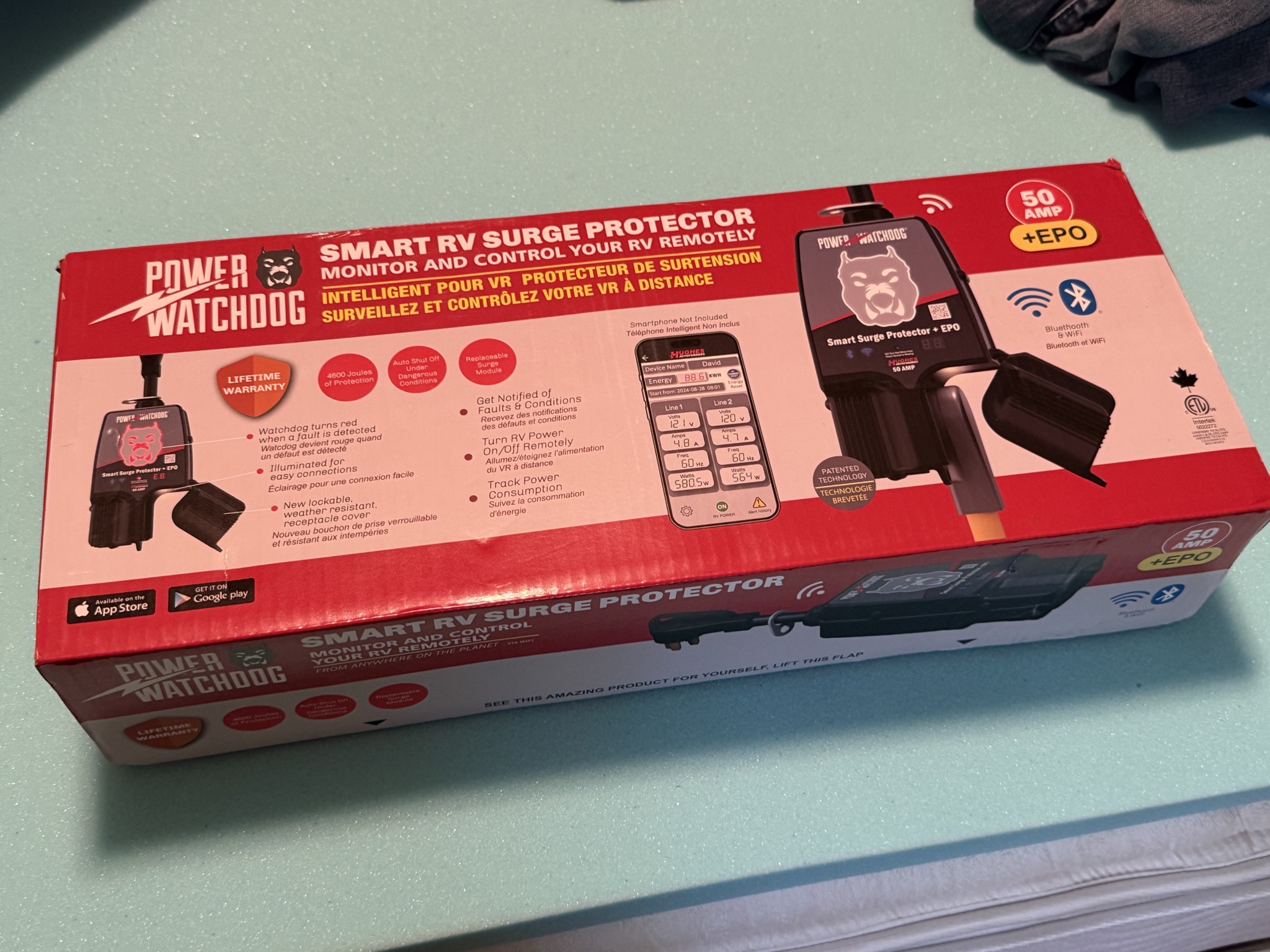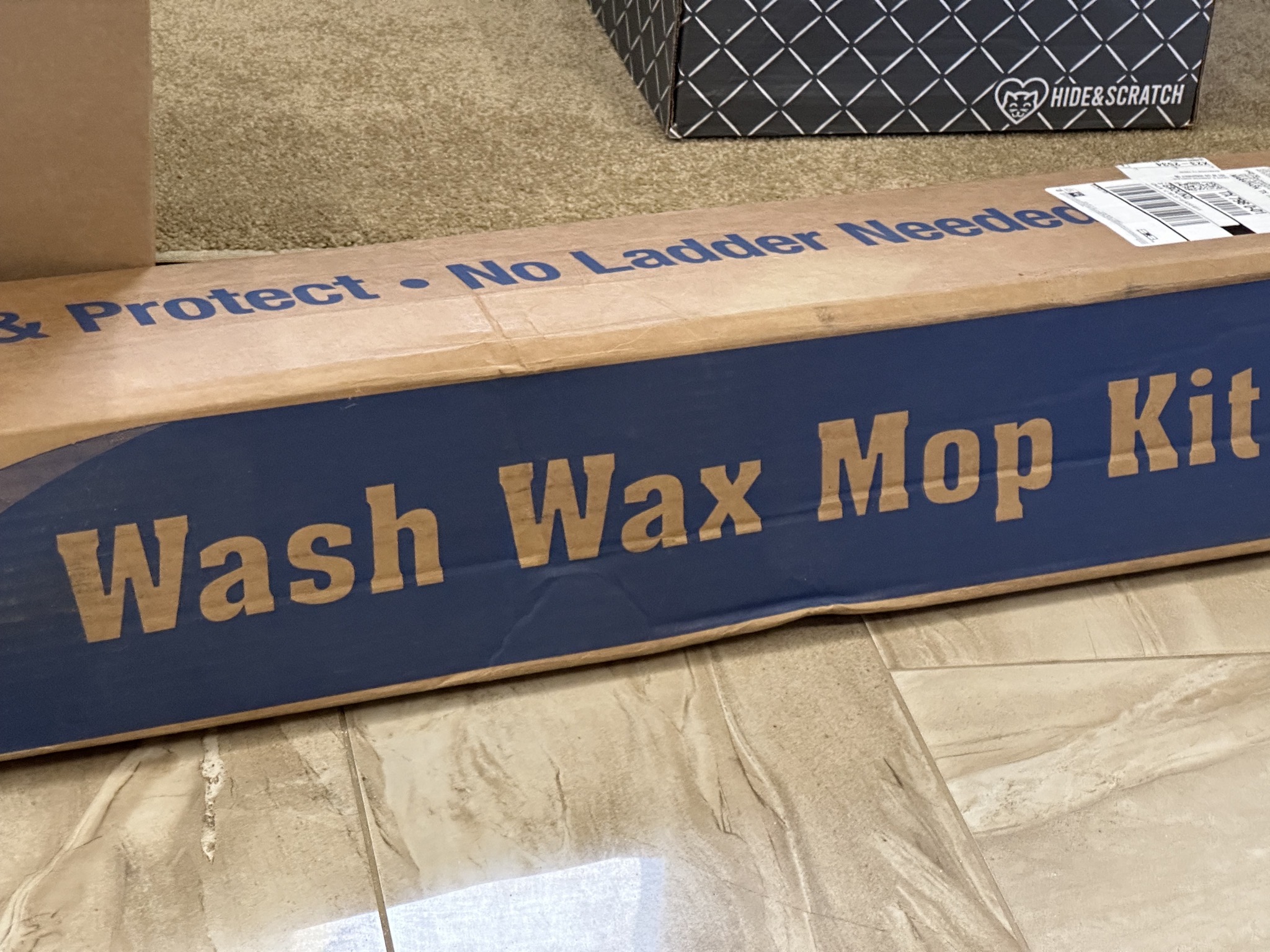
I’ve had a Power Watchdog smart surge protector for years, but I recently upgraded it to the new version, after a campsite pedestal issue partially melted the plug on my old one. This new model adds Wi-Fi support, a more compact form factor, protection for the plug, and built-in display dimming.
Unboxing:
The updated Power Watchdog app, which also lets you turn the power on and off without having the flip the breaker:
A nice improvement is the ability to change the dog face brightness; no need for a dimmer shade sticker anymore:
We have a Starlink Mini dish mounted on the roof of our truck, for use when we are driving in areas with little or no cell service, which can be quite nice. It was plugged into a 12V outlet by the back seat. But a minor inconvenience with it was that this outlet loses power when the truck is turned off, so we lose the internet connection, and it takes a minute to re-establish after starting the truck again.
So now we can control whether or not to start the Starlink connection by turning on the DC output of the battery, and it can continue as long as we like. Plus the power station may be useful for other uses when out and about.
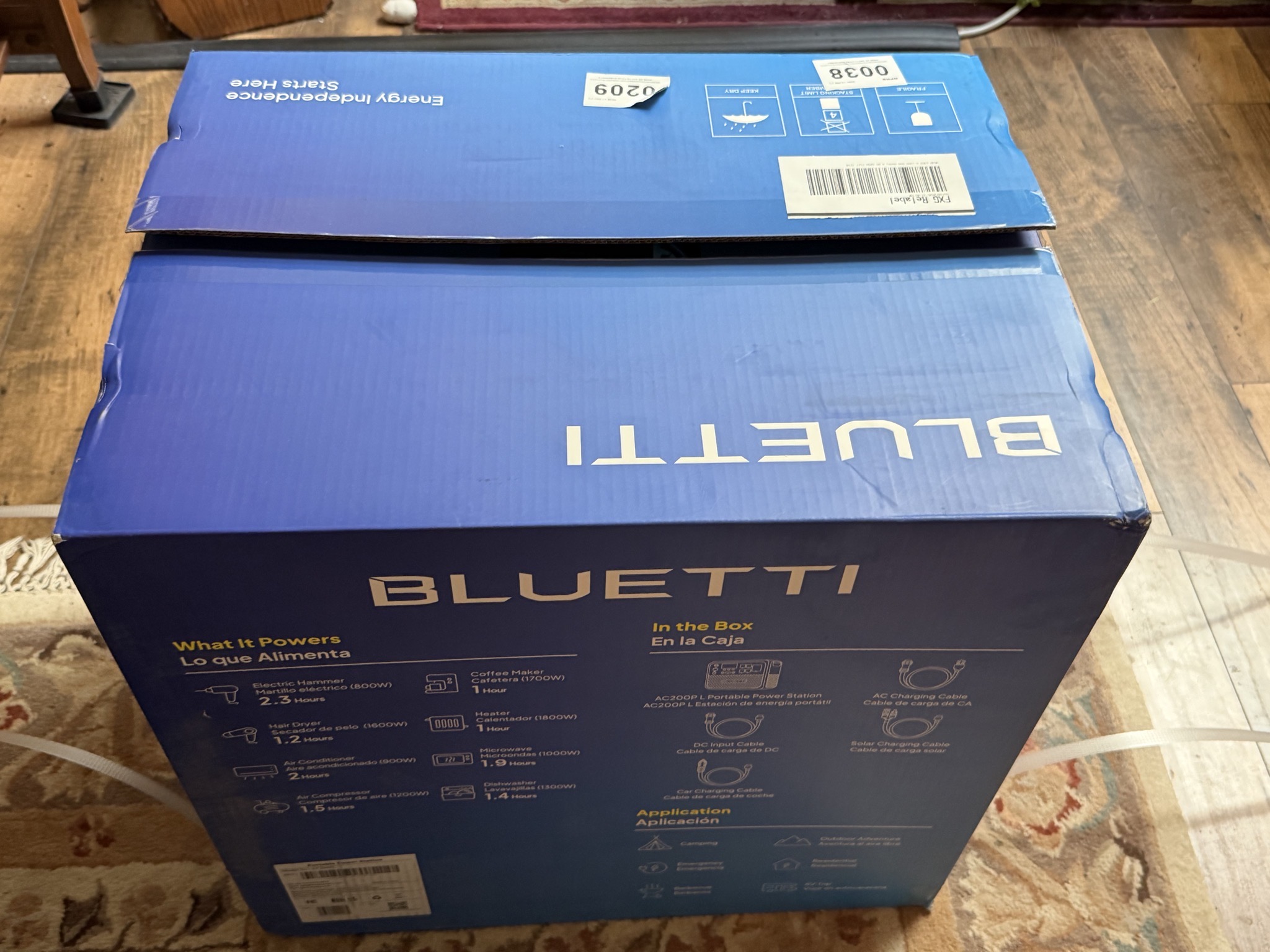
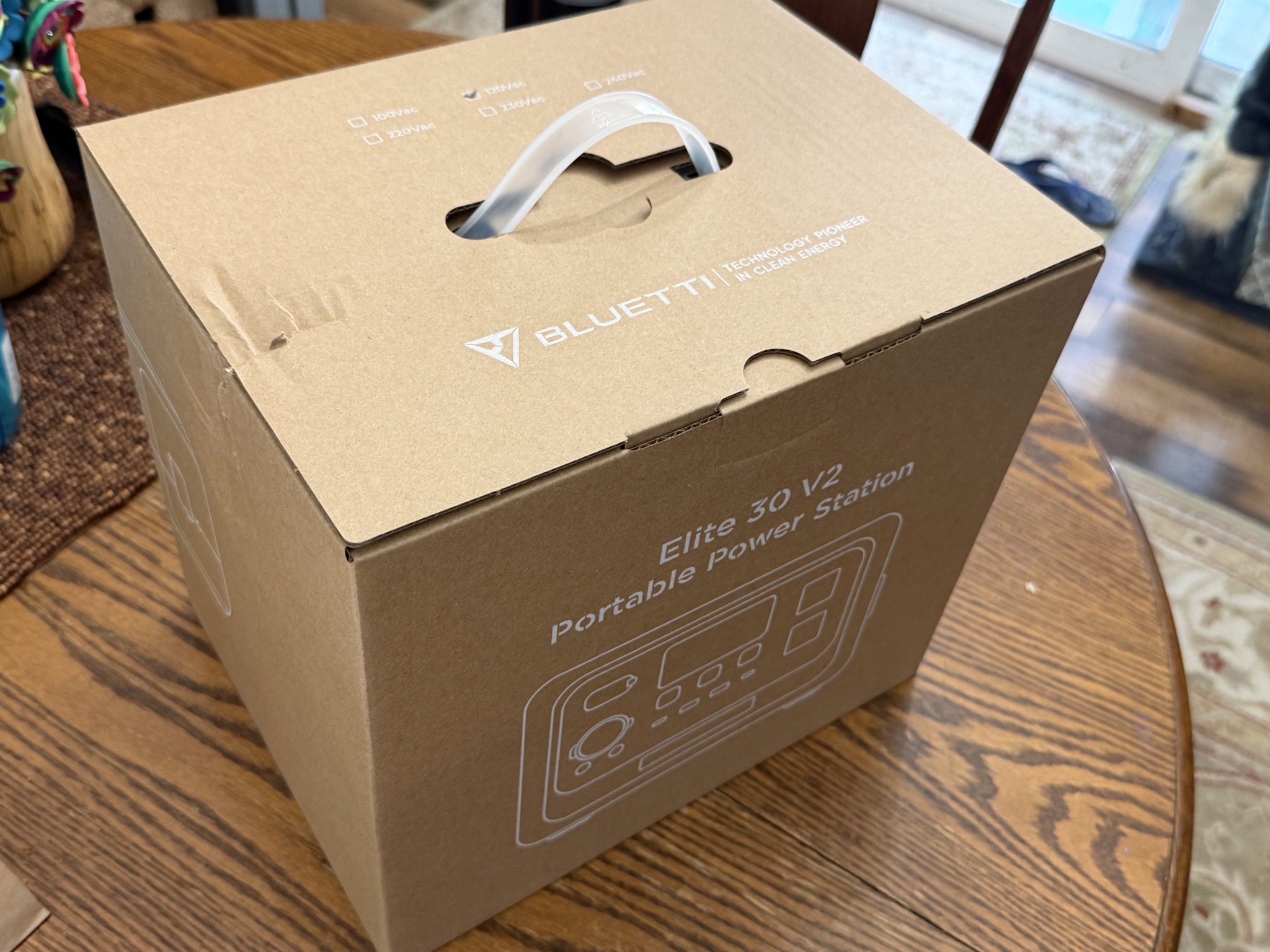
Unboxing:
Front of the power station; it has an input for DC or solar panel, three 12V DC outputs, two USB-C, two USB-A, and two AC outputs:
AC input on the side:
Stats:
Initially charging the battery via AC:
In the back seat of our truck, with 111W input from the truck (while idling) and 26W output to the Starlink Mini dish:
It has an app, which is more convenient to adjust settings:
We left our coach at Oregon Motorcoach Center in Eugene, Oregon to get its annual service (early) and some repairs and improvements, and drove our truck about 246 miles, about four hours of driving, to our home base near Shelton, Washington.
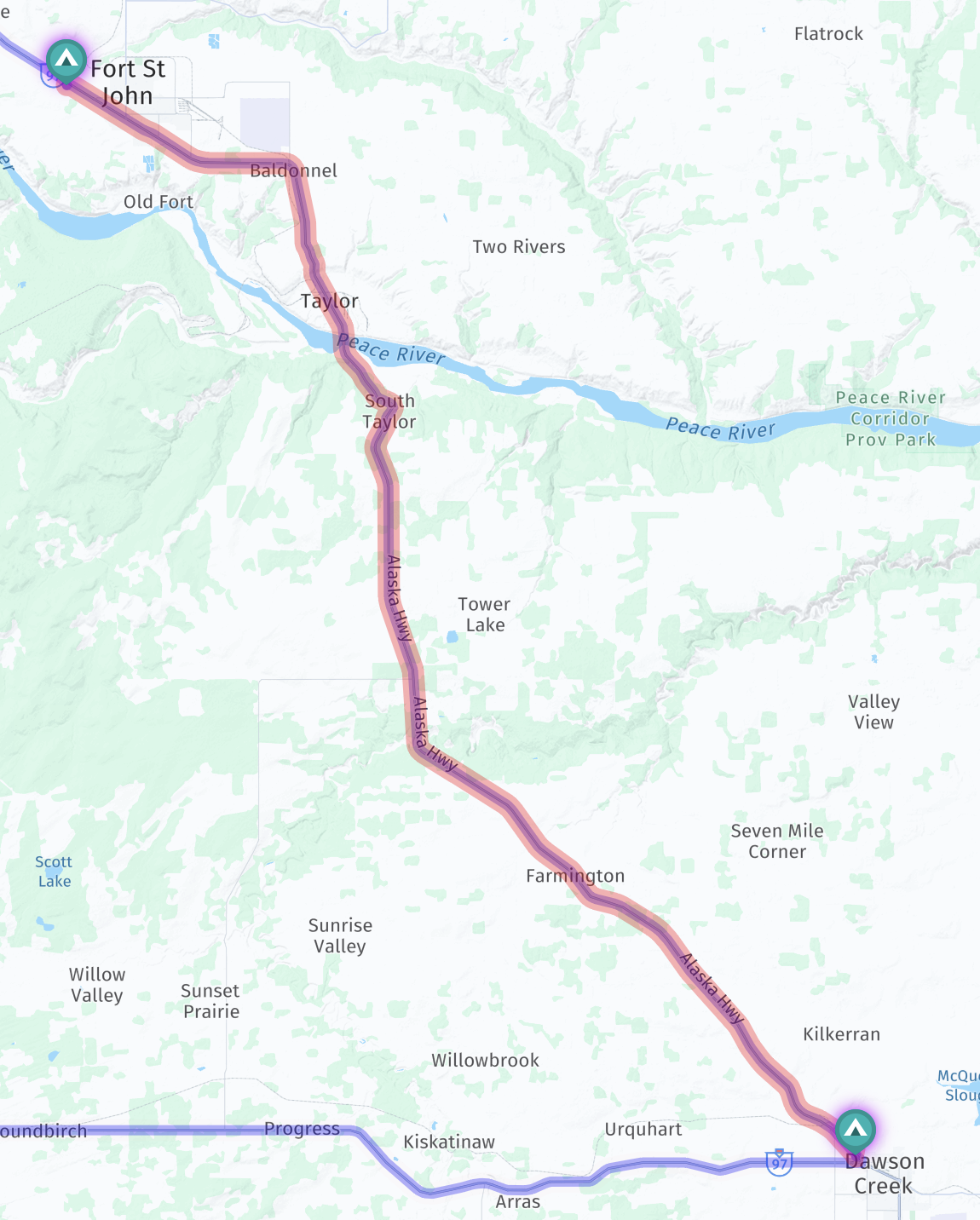
An interactive map:
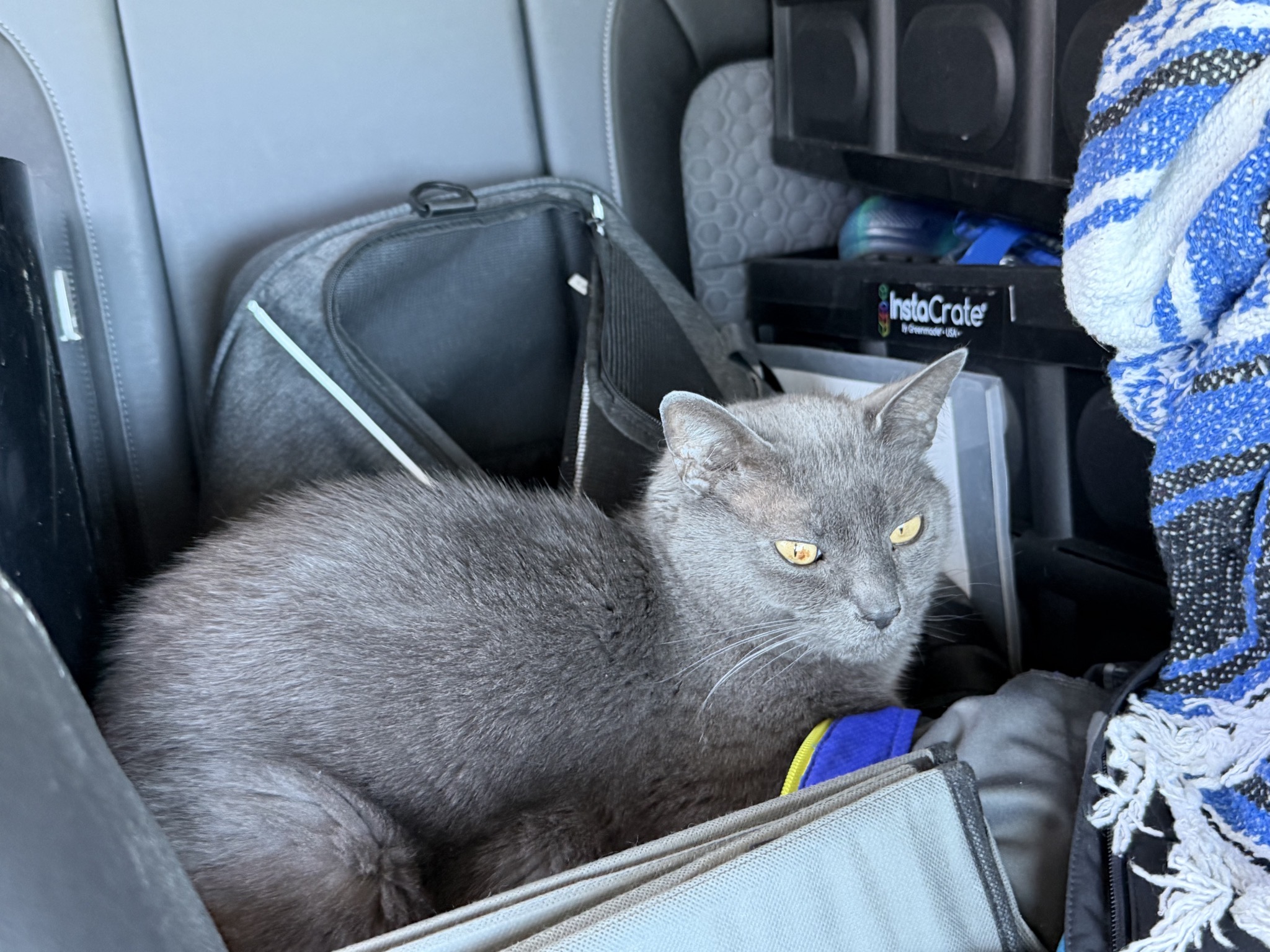
We of course took Paladin with us; traveling in the truck (or any travel really) isn’t his favorite thing, but he’s happy enough with some chill juice, if not stuck in his crate:
We stayed in a bedroom in our home base while our coach was being serviced.
As mentioned in that post, we decided to head home to get the truck fixed (if possible), and do the Alaska trip another year. After driving our morothome and truck separately for about 950 miles (1,529 km), we made it home safely.
Today we dropped off our truck at a local body shop, so they could investigate further, and get it inspected by the insurance adjuster. Hopefully we’ll hear their conclusion in the next few days, most likely early next week.
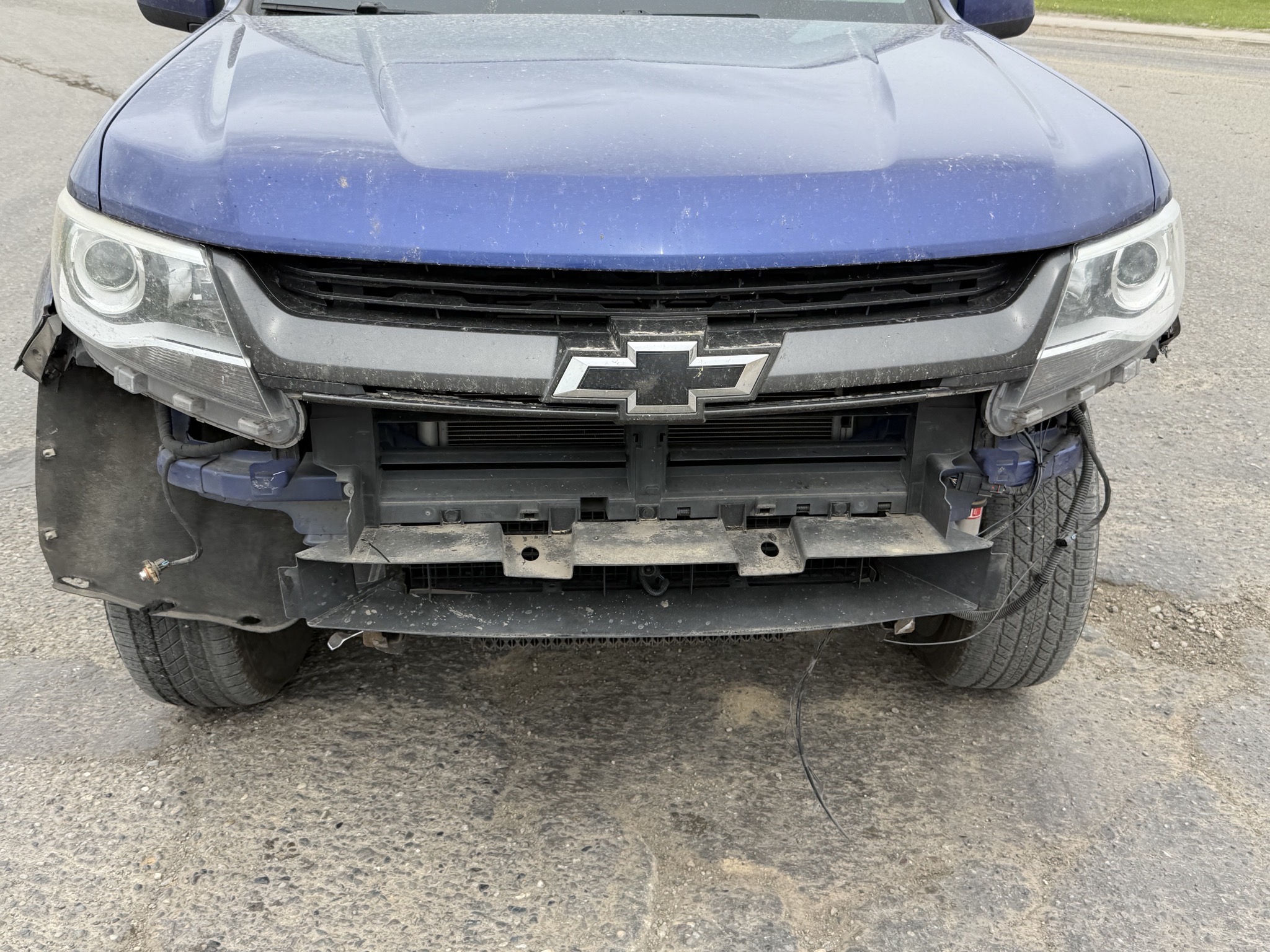
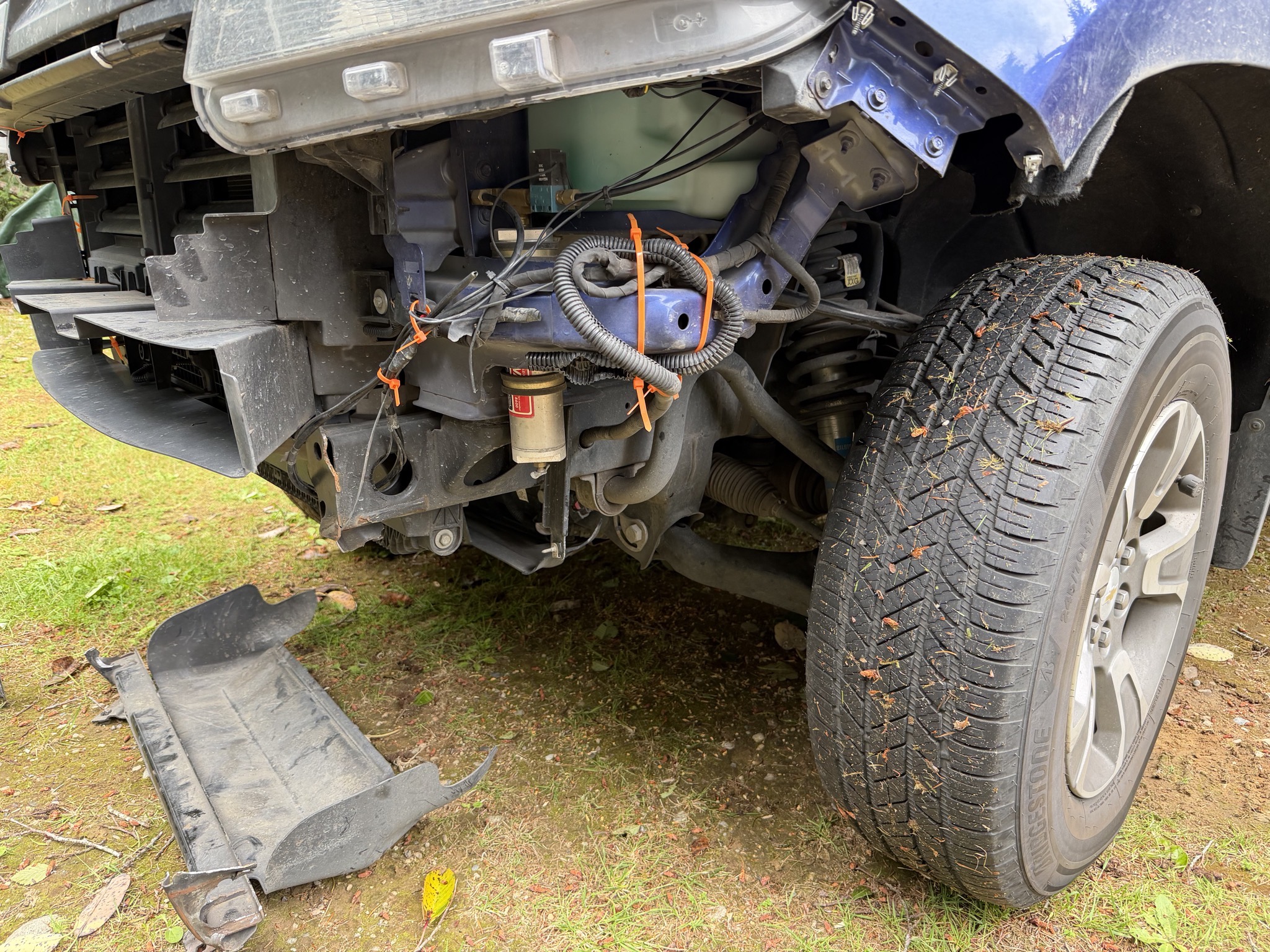
Here are some photos of the broken components laid out on the ground at home:
Truck, front frame, tow base plate, bumper, tow bar; all damaged:
I’ll do more real-time updates as we hear more, but in the meantime will resume normal blog posts next week, which are a couple of months behind real-time. They are not without drama, too… stay tuned!
This blog is a bit behind real-time; we are actually in Canada at present, on our way to Alaska. Just 46 miles into the Alcan after Dawson Creek, leaving a fuel stop in Fort St John, the front frame of our truck failed, and the tow base plate broke off. Fortunately the truck was stopped at an intersection when it failed; it could have been much worse if it failed in motion. Luckily we caught it within about a minute of it happening. Yes, we have a rear-view camera which shows the truck, but we don’t stare at it all the time, when merging onto a highway and navigating traffic (and it shows the side view when indicating).
After sleeping on it, we decided to head home. We considered driving the truck separately, or storing it in Fort St John and renting a car in Alaska, but either would impact the enjoyment of our trip. We decided we’d rather come back again in a year or two and do it right. (We’re thinking about downsizing to a van or B+ anyway, which might work better.)
I’ve zip-tied the loose wires etc, and we’ll drive separately home over the next few days. We aren’t entirely missing out on Alaska this year: we also have an Alaska cruise in September, so that helps us feel this was the right choice for us. We’ll be back to see the rest of Alaska in the next year or two, and would like to explore more of Canada too.
Here’s a video from someone who saw us dragging the bumper (and then flagged us down). The video has gone viral, with millons of views in various Facebook groups, TikTok, etc. Reading the comments provides an interesting sample of humanity; some sympathetic people, but a lot more trolls showing a lack of empathy for a significant event, or making irrelevant comments or incorrect assumptions (it’s not a Jeep, we didn’t drag it lots of miles, we’re not Boomers or rich, etc etc). Disappointing, but not surprising.
We sometimes explore areas without cell service, as we travel around the US… plus we are exploring New Zealand in a van.
We really enjoy using Starlink with our coach, and wanted to bring a dish to NZ, but our gen 2 dish is rather bulky. We decided to get a Starlink Mini dish, which is much smaller, and has the router built in. It was small enough to fit in carry-on luggage for our NZ trip, and mounts on our truck and the NZ van via a magnetic mount, powered from a 12V outlet (aka cigarette lighter).
It isn’t needed all the time, so we can pause the dish when not needed. In fact, with Starlink’s current policies, they charge $5/month for Standby Mode, which has unlimited slow data (500 Kbps), so is still useful for occasional or minimal use.
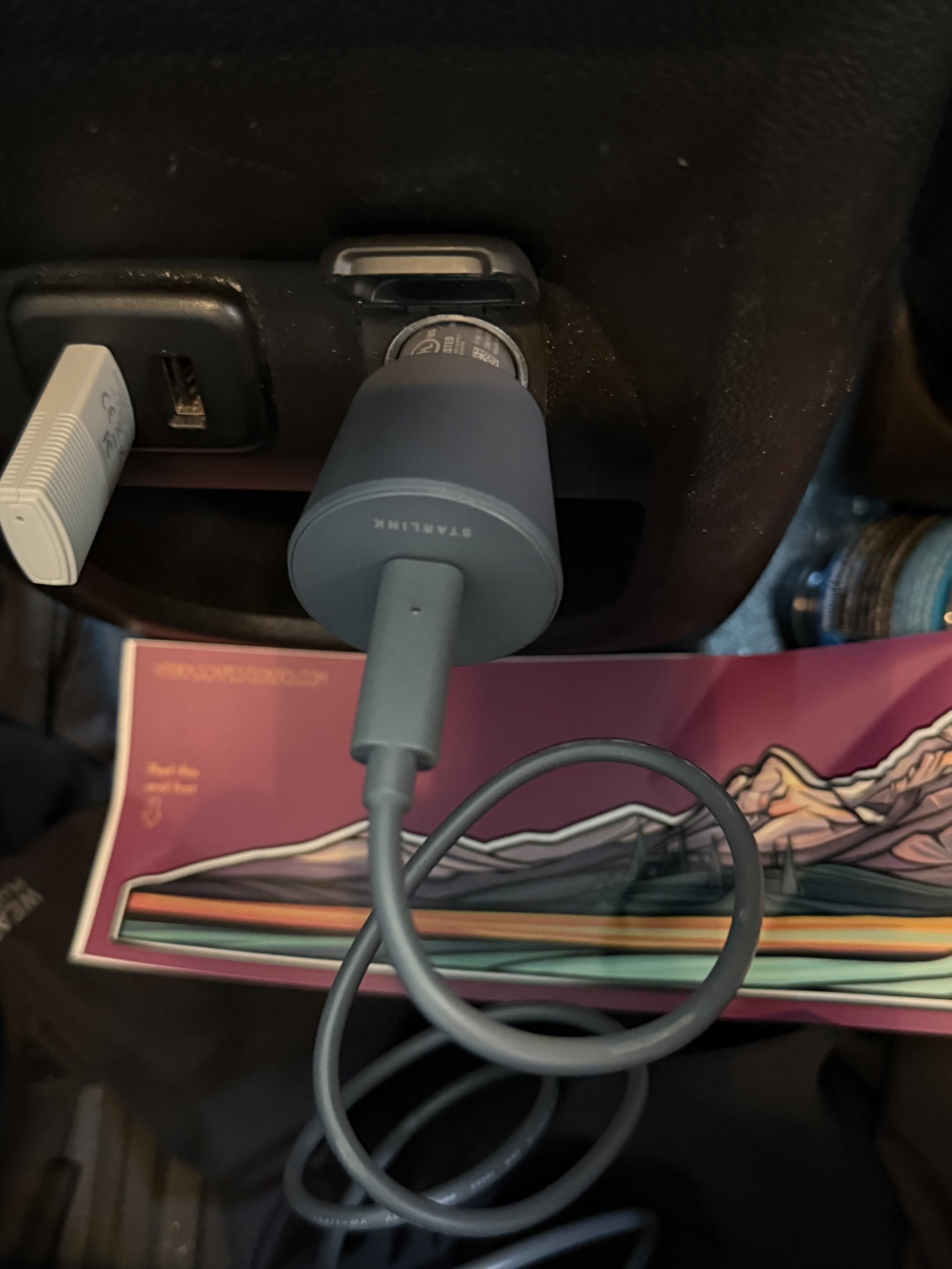
Here’s the 12V power in our truck (the white USB dongle is a wireless CarPlay adapter):
The cable is routed out the rear window, which can still latch closed:
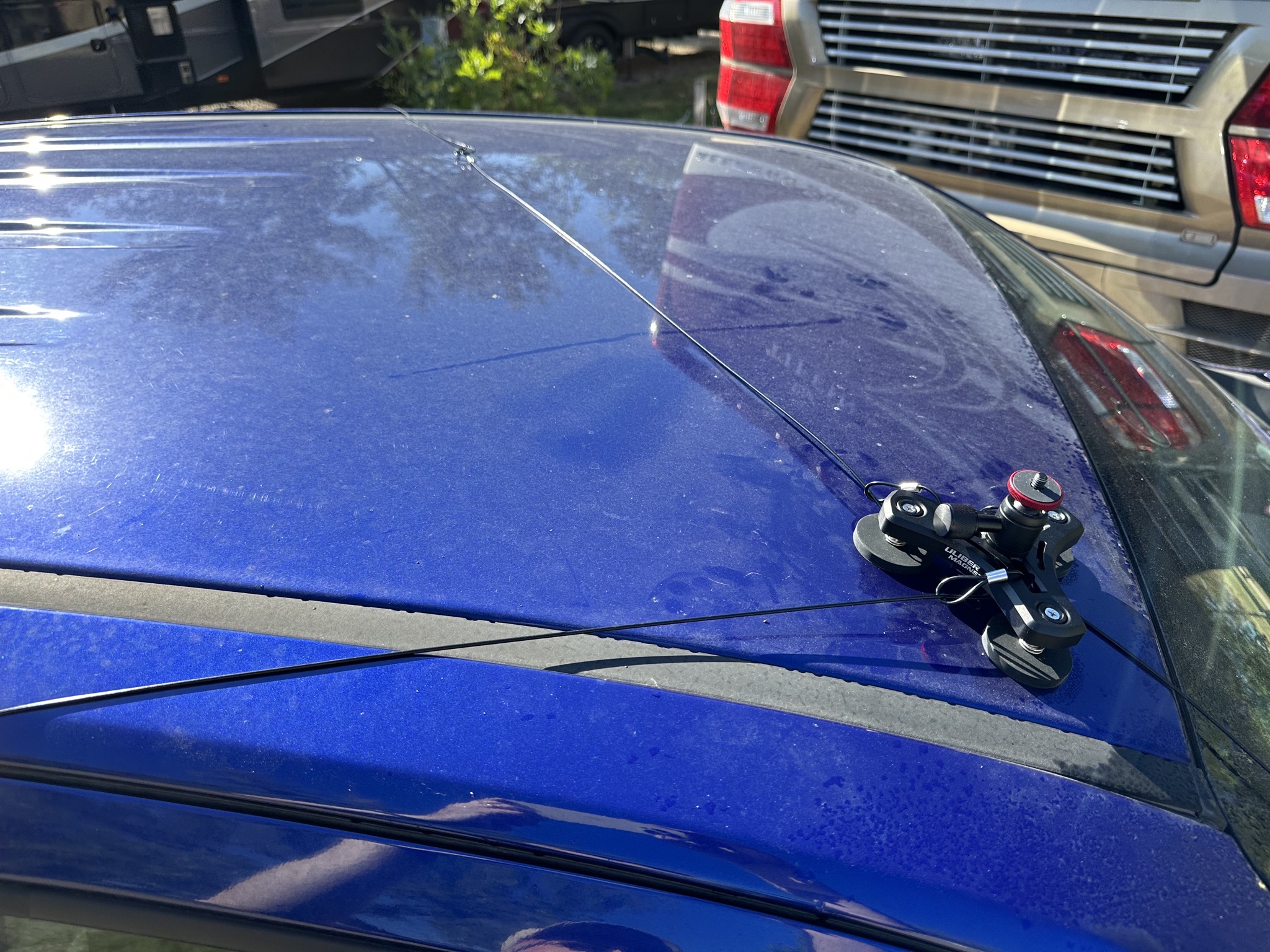
The cable is clipped to the roof, with a couple more clips on the edge to hold the cable when the dish is removed from the roof:
The Starlink Mini dish is securely attached to the roof via a magnetic mount:
Ever since we started preparing for our current RV lifestyle, we’ve had a storage unit in the Portland area, somewhat near our old homestead. But paying for ever-increasing storage rental was getting old. So we bought a shed for home, and one of our projects during our annual visit home this year was to move the contents of the storage unit to the shed.
To do this, we rented a 15 foot U-Haul truck near the storage unit:
At the storage unit, before loading the truck:
(Unfortunately I didn’t get a photo of the loaded truck; it was full, just big enough.)
The truck at our shed:
Looking in the empty truck after we had unloaded it:
Not too hard. Nice to have our stuff at our Washington home.