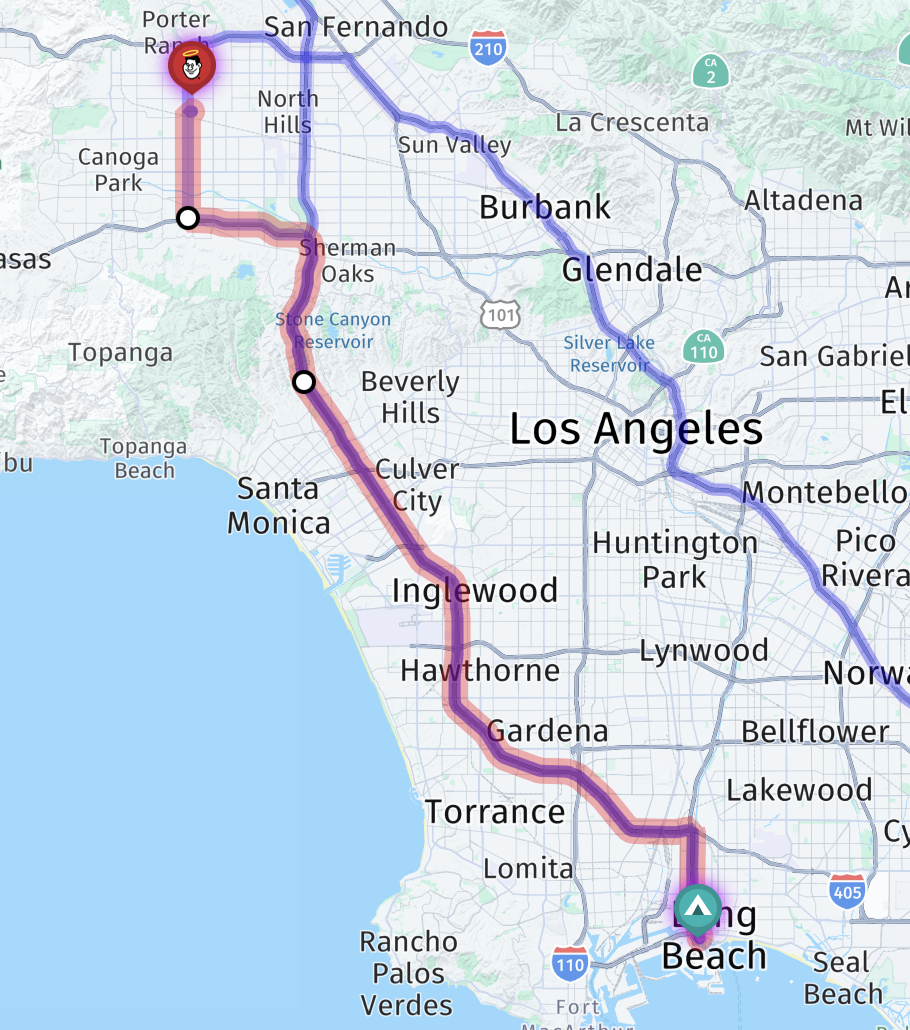
A timelapse of driving our rental campervan from Rotorua to Napier in New Zealand.
NZ: Rotorua to Napier
Continuing our journey, we traveled south from Rotorua to Napier.
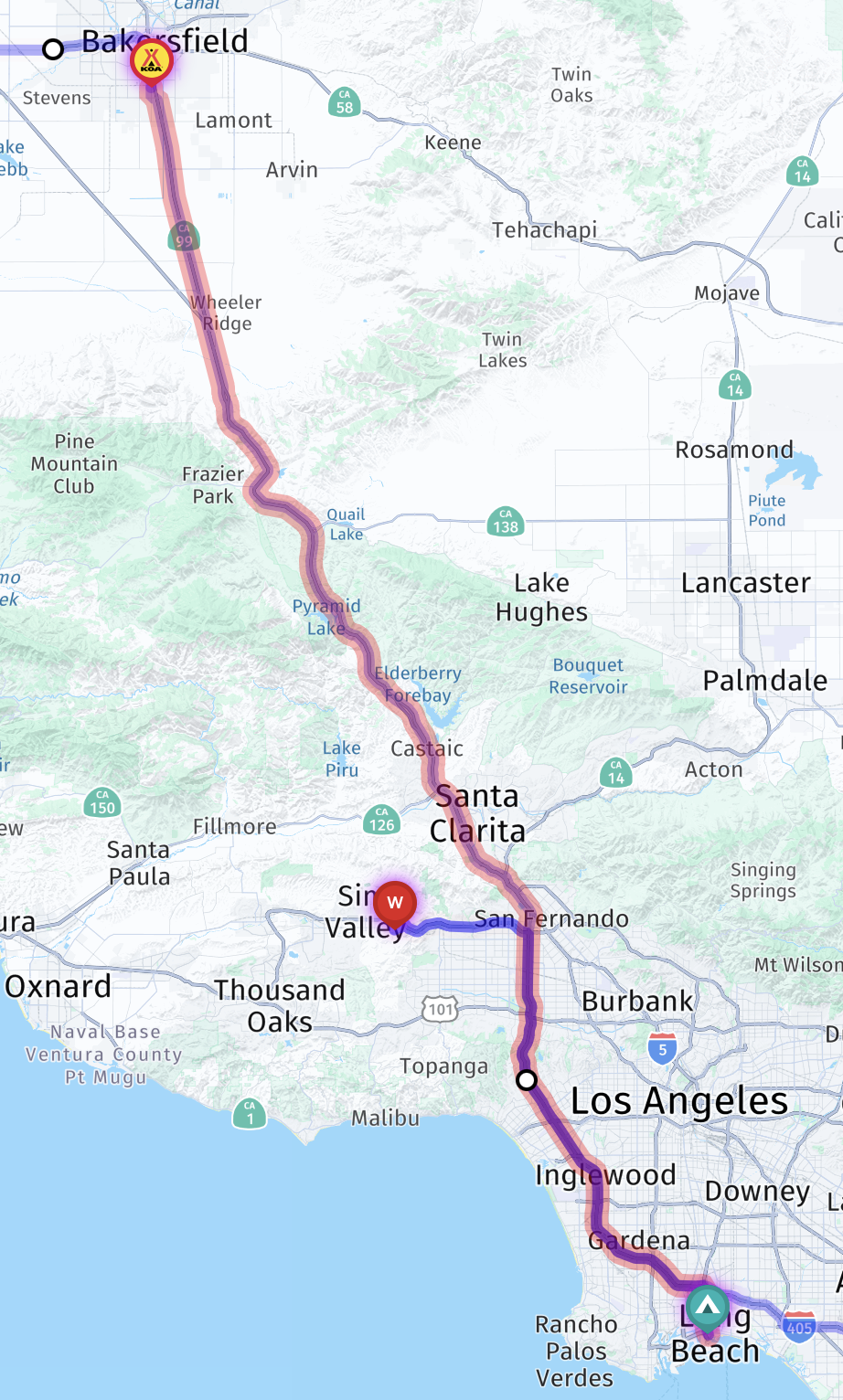
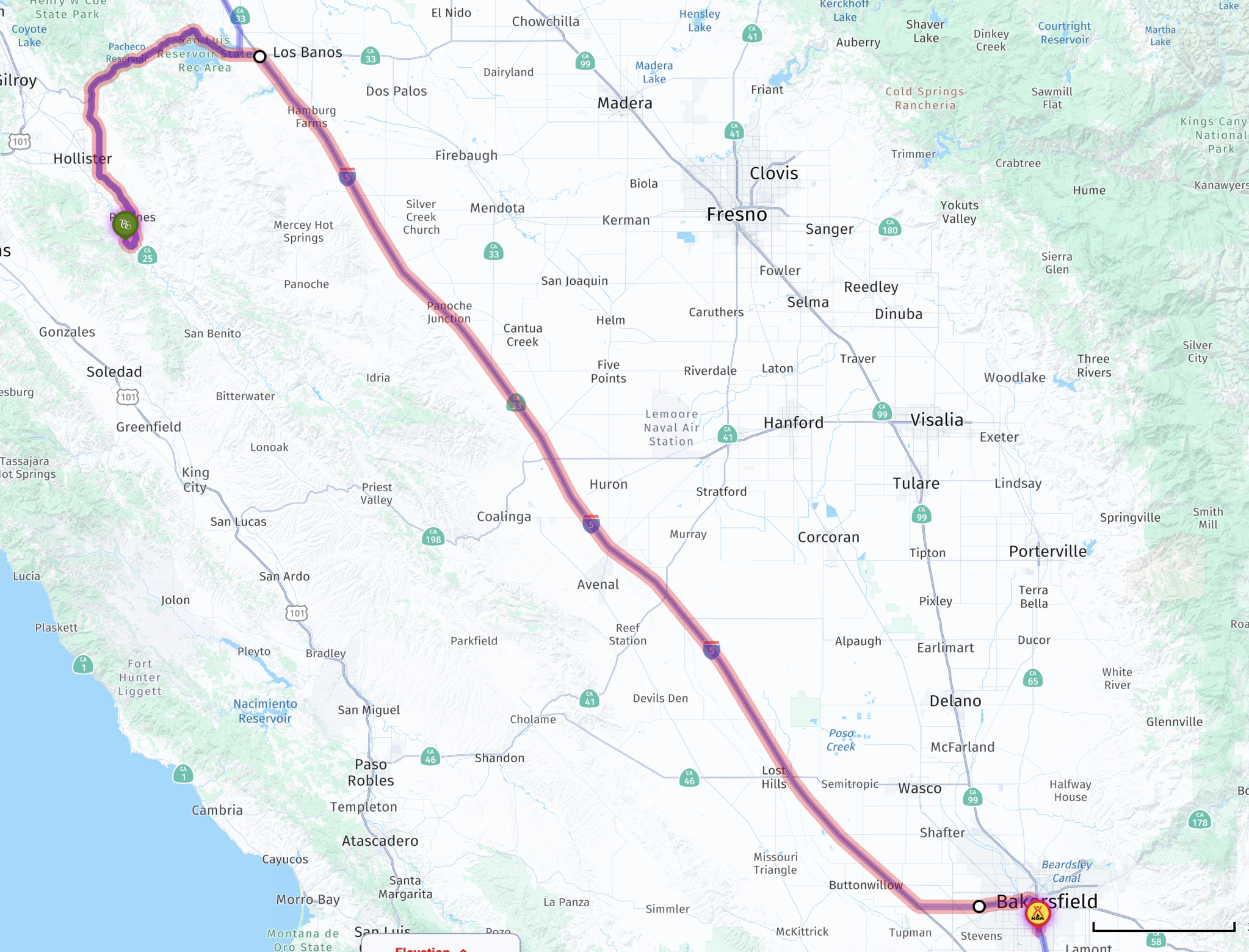
Here’s an interactive map of our route, with some of the stops marked:
Our van in our site in the morning:

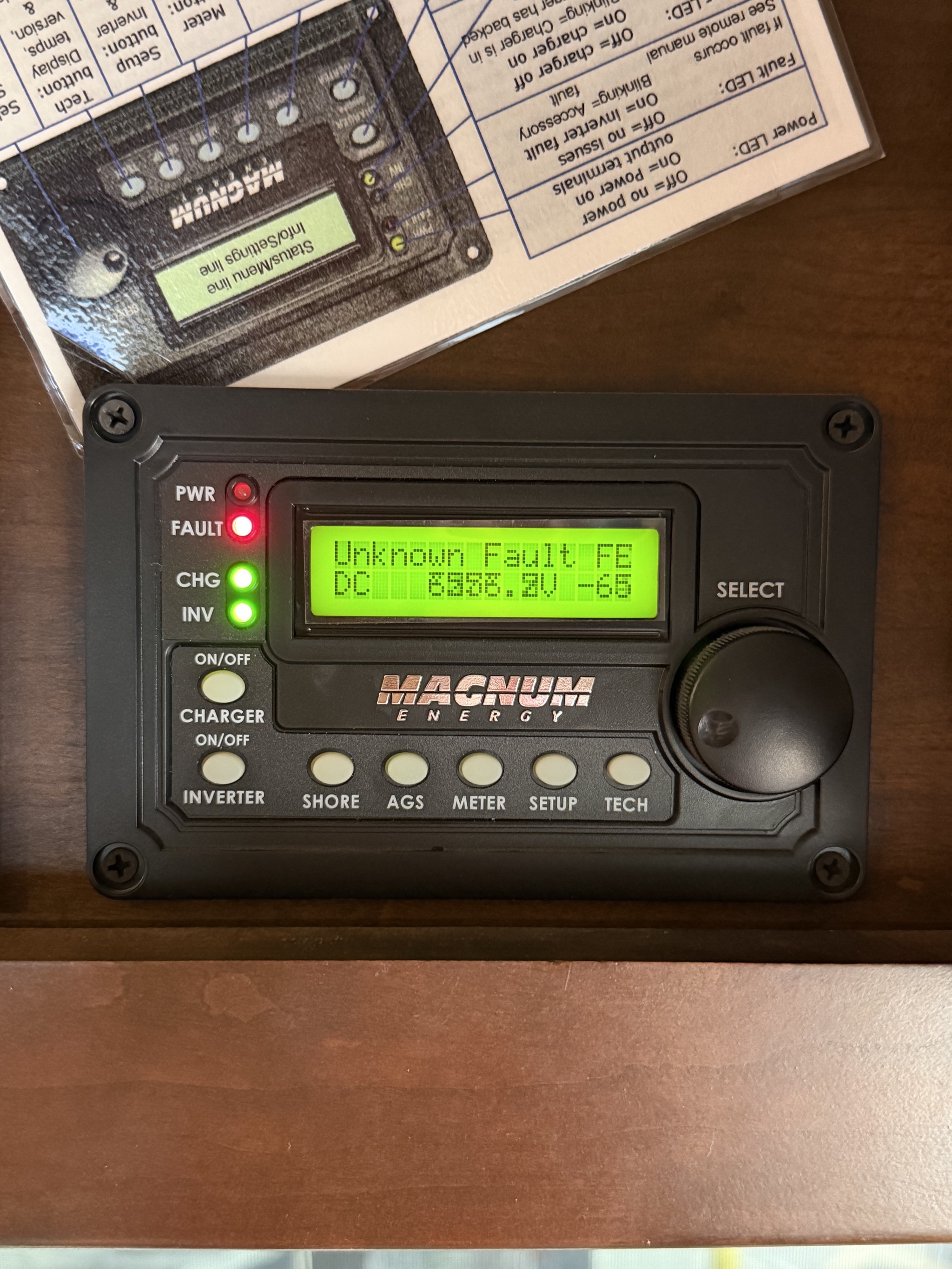
The electrical connections are a bit different in NZ… some in better condition than others:

We brought our AeroPress and manual coffee grinder, and bought some local coffee and an electric kettle / hot water jug to make coffee in our van:

Some ducks in front of our site:

Heading out, we stopped at the Skyline Gondola:


Selecting a morning snack:

Snack and coffees with a view:

Watching the luge:

Gondola selfie:

Back down the gondola:

Souvenier photos:


Geothermal power plant:


Huka Falls:


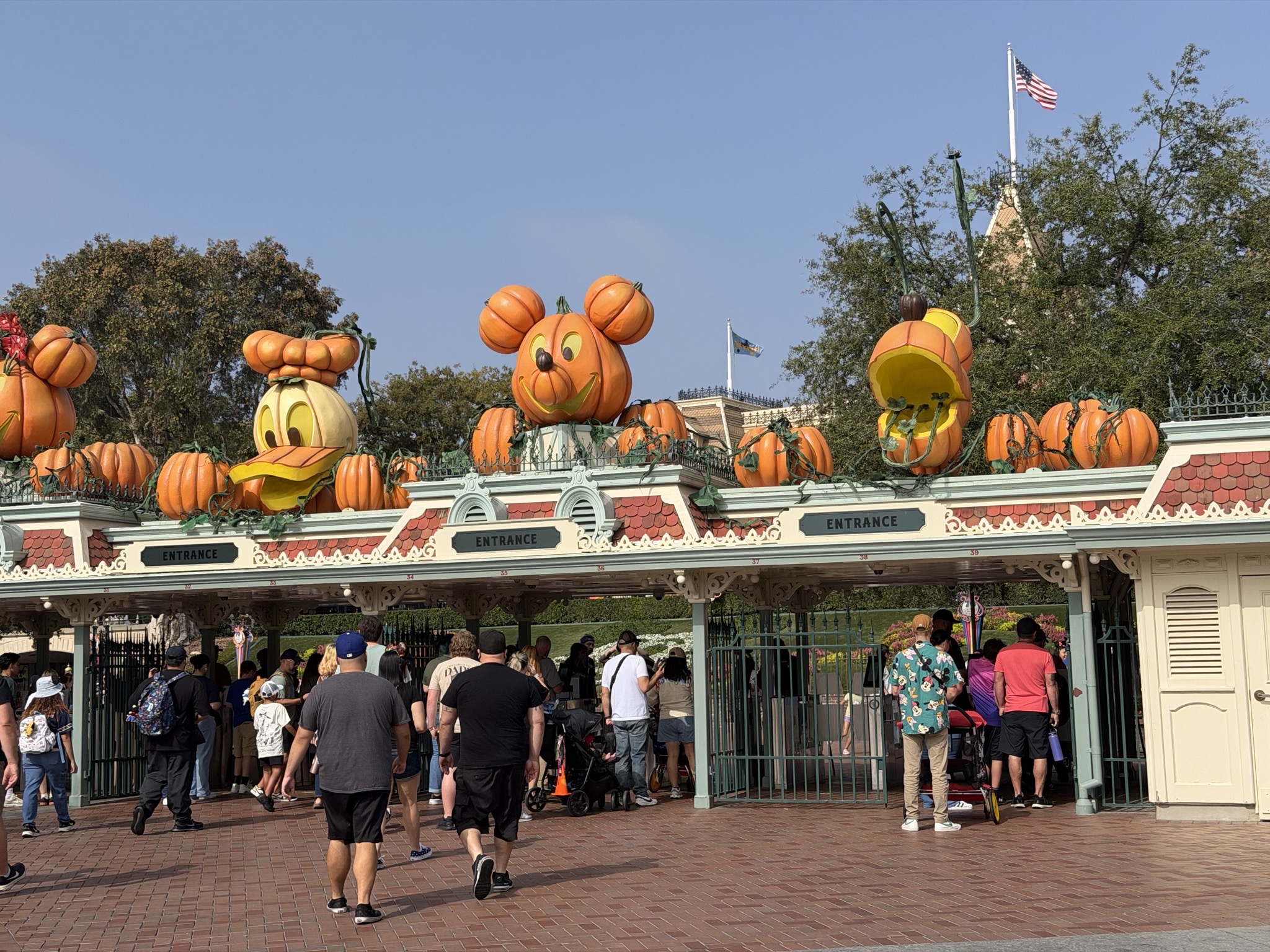
In Taupo is the world’s coolest McDonalds with a plane:


A waterfall viewpoint:


Arriving at Napier Beach Top 10 Holiday Park:

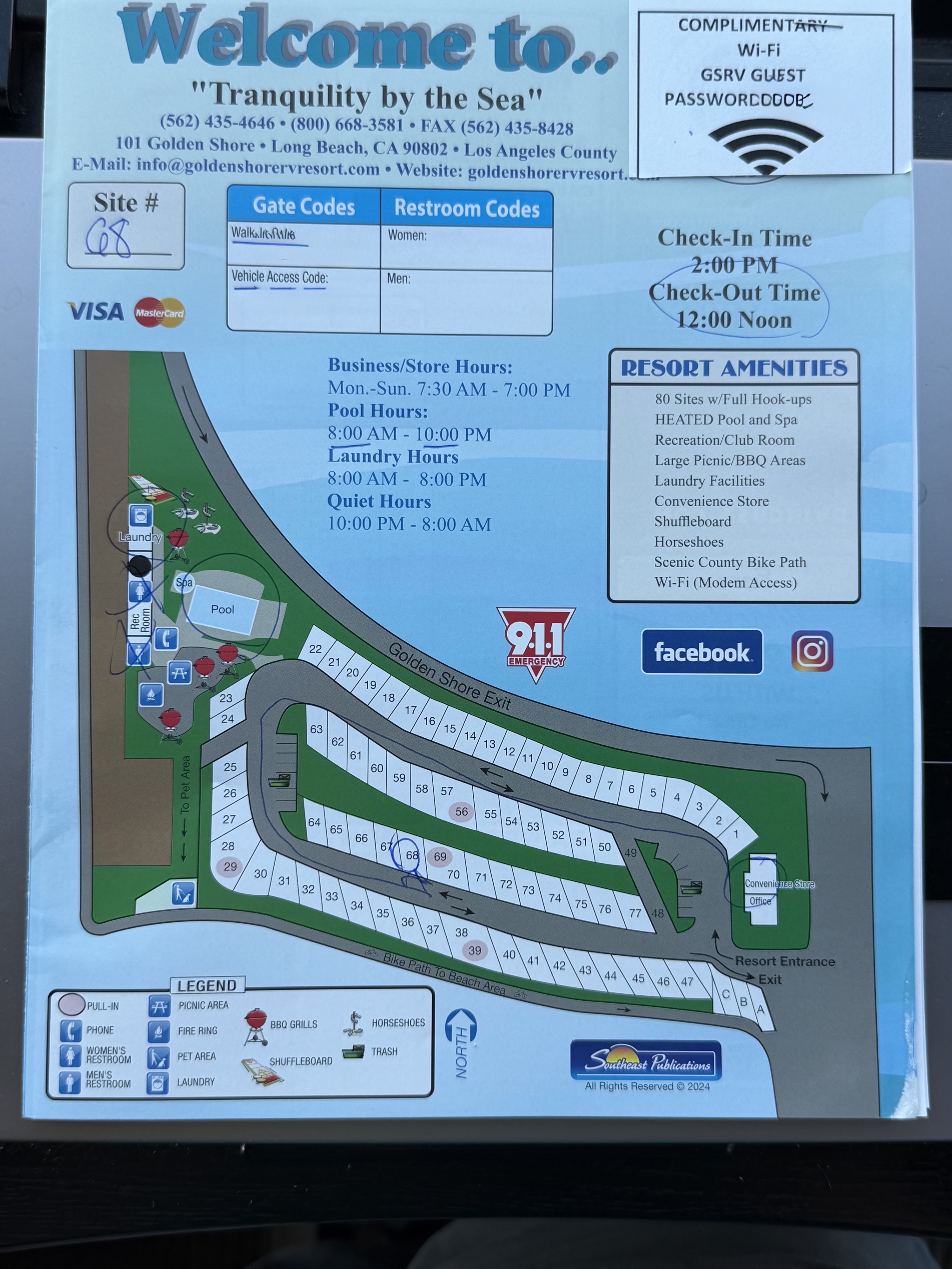
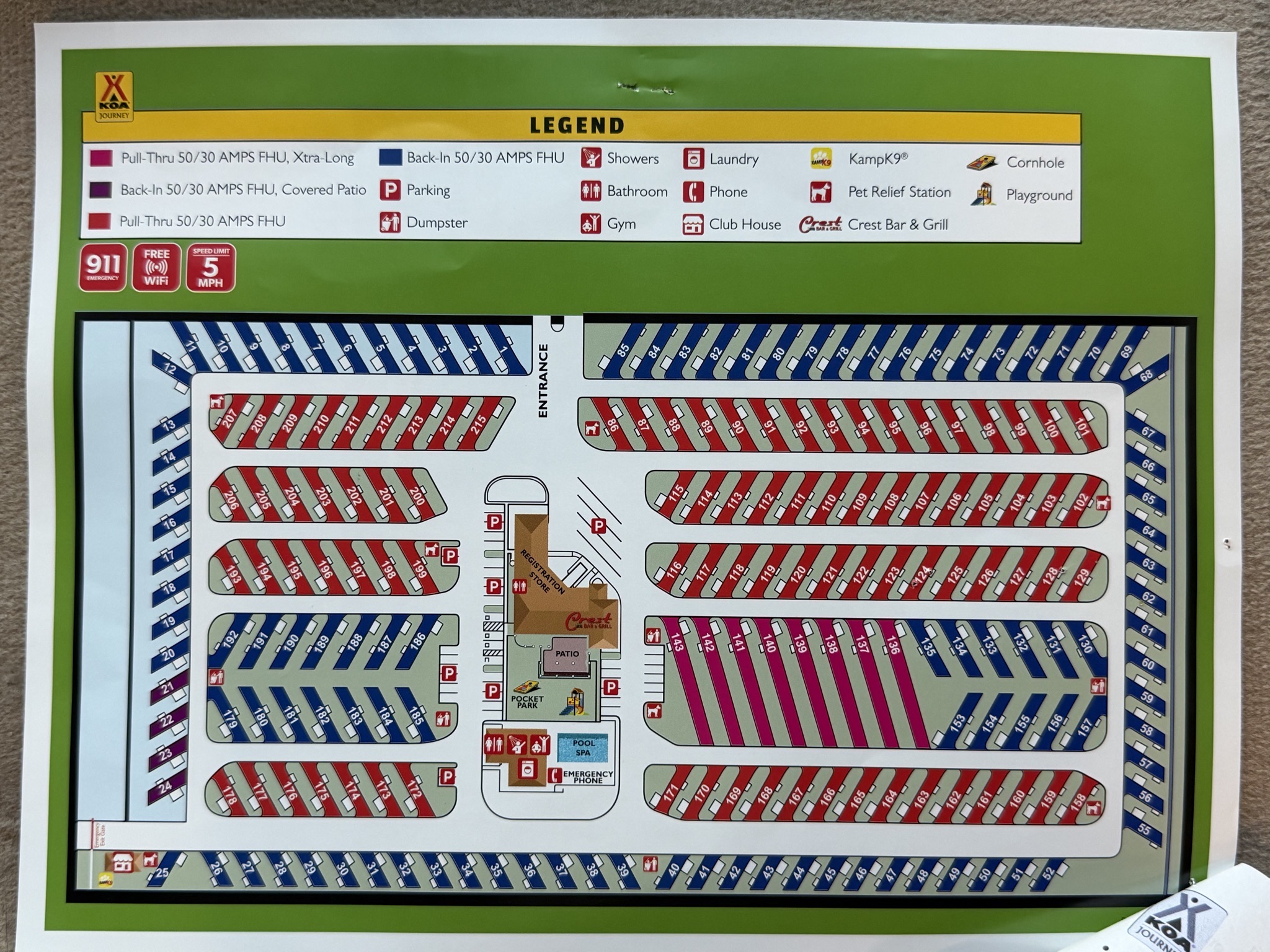
Campground map:

Rainbow:

Napier Beach:

Tiny cabin:

Other sites:

Our site, also with a nice view:

NZ: Hobbiton
We visited the Hobbiton Movie Set, where the Hobbiton scenes of The Lord of the Rings and The Hobbit movies were filmed.
We actually visited there decades ago, before The Hobbit was filmed, where they encouraged us to help trample the paths as they were preparing the site for filming. It’s expanded quite a bit since then; there was no Green Dragon Inn or Bagshot Row there back then.
Selfie by the sign (as seen in yesterday’s post):

Path into Hobbiton:


Hobbit holes:


A photo of us in a hobbit hole doorway (there’s nothing but a wall behind us):


Bag End:


Looking down at the Green Dragon Inn:

More hobbit holes:


Going inside:


It looks bigger on the inside than the outside… because they cheated a bit. Here’s a 3D floorplan I found on Reddit (the tour is split into two groups; we went in the left side; others go in the right side). Don’t look if you don’t want the magic spoiled:

The Green Dragon Inn, “home of the brew for the brave and true!”


We had a “Sackville Cider” (hard apple cider):


A magical experience.
NZ video: Tauranga to Rotorua campervan travel timelapse
A timelapse of driving our rental campervan from Tauranga to Rotorua in New Zealand.
NZ: Tauranga to Rotorua
After spending a couple of days at Mum & Brian’s house, where we had quality time with the fam and got some basics for the van, we were going on an adventure!

Just the two of us, heading towards the place where the scene in that GIF was filmed: Hobbiton. Then on to Rotorua for the night.
An interactive map of our route (with the origin vague for privacy):
We stopped at McLaren Falls for a second breakfast, crossing a one lane bridge:

The van parked; it fit in a normal spot fairly well:

Second breakfast at the Falls Cafe:

Scones and flat white coffees (of course; that’s the only style of coffee we had the entire trip):

McLaren Falls Park looks like a nice park, but no time to explore it; we had places to be:

The falls:


Heading downhill:

Arriving at Hobbiton, with (of course) lots of camper parking:

Sausage roll and coffee for lunch:

Hobbiton selfie:

I feel that Hobbiton deserves its own post, so I’ll do that tomorrow.
Sheep when leaving Hobbiton:

Corrugated iron sheep in Tirau:

Tree tunnel:

Arriving at our first campground of the trip, Willowhaven Holiday Park:

Campground map; we were in site 3 (but not tent site 3 or cabin 3; their map is a little confusing):

Lakefront view from our site:

We just stopped there to register before the office closed, then headed out again, towards Rotorua. Past the home of Zorbing:

You can tell that Rotorua is a major tourist town when even the grocery store has camper parking:

Grocery shopping:

Then we headed to Polynesian Spa for a relaxing soak:

We enjoyed a private lakefront thermal pool:

Afterwards, we had a lavish charcuterie platter and fruit smoothies for dinner:

Then back to our lakefront site:


I hadn’t mounted the Starlink dish on the roof yet, so I placed it in front of our site:

It was a great day. I’ll post about the Hobbiton stop tomorrow. Before that, stay tuned for a timelapse video of our travels; I will have a video on the same day as each travel post.
NZ: Pokeno to Tauranga; family time
Having picked up our campervan from McRent in Pokeno, south of Auckland, we followed Neville and Karan for a couple of hours, about 150 kilometers (93 miles) to Mum and Brian’s house — my mother and her husband — in Tauranga, where we would spend two nights.
As usual, Jenn drove; I was authorized to drive the van, but didn’t, as Jenn prefers to drive and I prefer to navigate and take photos. We work well together.
New Zealand drives on the left side of the road, which is the opposite of the US, but Jenn had seven years of previous experience, albeit about 25 years ago, so wasn’t a total newbie at it. She did great.
Here’s an interactive map of our route (with the destination vague, for privacy):
Exit towards Tauranga:

Route 2 is the second-biggest highway in the North Island, but is just a one-lane-in-each-direction road through farmland, as is common throughout the country. So encountering farm equipment wasn’t unexpected:


In the small town of Paeroa, there is a large L&P bottle, that I remember visiting as a kid; L&P stands for Lemon & Paeroa, and is my all-time favorite soda beverage:

Another (newer) large L&P bottle on the way out of town:

A bridge in Karangahake Gorge:

The small town of Waihi:

“We Love Avos”:

Roadworks:

“Welcome to Tauranga”:

Downhill towards the harbor:

That night, Nev, Gav, and I went to get some takeaways/takeout from Cafe Istanbul for dinner:

Weird, but tasty:

The next day, we went shopping for basic food and housewares for the van, and stopped in Jesters pies for meat pies and flat white coffees:

Not a lot of pics of our couple of days at Mum & Brian’s place; we were concentrating on spending time with the fam.
NZ: internet and cellular connectivity
While in New Zealand we of course wanted internet connectivity, for navigation, planning, entertainment, and work — Jenn worked for the first week of our trip, and I kept in touch with my customers and clients.
Like in the US, coverage can be mixed in NZ, with some areas with limited or no reception. To ensure we could get connected when needed, we planned four options: Starlink, cell-based Wi-Fi in the van, and two phone cell plans.
The van rental came with a Wi-Fi hotspot, which had an unlimited (but rather slow) plan on NZ’s 2degrees cell network. We didn’t use this very often, since it wasn’t very fast, maxing out at about 12 Mbps down, 10 Mbs up, but typically much slower. But it was definitely nice to have.
Jenn and I each got a travel eSIM for our iPhones. To maximize coverage, we each got different networks; I had a One NZ 40 GB travel plan, and Jenn got a similar Spark travel pack. I figured that 40 GB was plenty of capacity, and it was; we each used a bit less than half. These plans were designed for visitors to the country, so lasted for 90 days then expired, rather than a regular prepay account. They included voice, text, and data; there are international providers that just have data, but we wanted the safety net of voice and text, though only used those features a few times. These cell networks of course varied depending on where we were, but I measured them at around 90 Mbps down, 5 Mbps up.
Finally, we also used Starlink satellite connectivity. I brought our Starlink Mini dish and its cables in my carry-on suitcase. It may seem silly or futuristic to bring a satellite dish in a suitcase, but it’s really small, about the size of a laptop, and was super useful. Like in the US, we used Starlink as our preferred network when around the van. I measured it at around 250 Mbps down, 30 Mbps up.
I mounted the Starlink Mini dish on the metal roof of our campervan, using a magnetic mount that I had delivered to Nev’s place:

I wasn’t sure about getting powerful magnets through airport security (the guidance I read wasn’t clear), so felt it was safer to order one for delivery to NZ rather than bringing that too… plus less bulk in the suitcase.
I routed the Starlink cable across the roof and down the side, held in place with Command Strip clips (that were easily removed at the end of the trip, without leaving any residue), then through the passenger door:

The Starlink cable was plugged into a 12V to 24V step up adapter:
Which was in turn plugged into the 12V socket on the Ecoflow battery, so it would continue to run when the van was in motion:

At least until the battery ran flat; it only lasted about five hours running the Starlink; it was a rather small battery. We could have plugged it into the 12V outlet on the van, but five hours was enough most of the time, and we could fall back to cellular options other times.
Between the Starlink dish and three cell plans, we usually had internet coverage when we wanted it.
NZ: campervan
For our New Zealand trip, we wanted to continue the RV lifestyle, but in a smaller RV, more suited to narrow NZ roads. We searched for various options, and settled on a campervan, what we’d call a Class B van in the US.
The van was a German-made Sunlight Cliff 640. We rented it from McRent, a primarily European rental company that has a couple of branches in New Zealand, in Auckland and Christchurch. Which was convenient, since we wanted to pick it up in Auckland and drop it off in Christchurch.
We chose several optional add-ons for the rental, including the basic package of bedding, towels, etc, plus a package that included a cellular Wi-Fi hotspot, folding table and chairs, first collision coverage, and more. (We didn’t need the collision coverage, but good to have.) We also got a portable BBQ, which wasn’t a rental but something they sold… but we didn’t end up using it or even unboxing it, so we donated it to the NZ Red Cross (along with a bunch of other things we bought) before dropping off the van.
Here’s the floorplan of the van:

Having a north-south bed (i.e. one sleeps in line with the van) was important to us, since otherwise one of us would have to climb over the other to get in and out. Plus we wanted a full-time bed, not a couch or dining table that folded down to a bed like many vans do, meaning you have to make the bed every day.
We also wanted something small enough to be able to fit in regular parking spaces, for the most part, since this would be our only vehicle — in the US we tow a truck behind our motorhome, so we can use that for daily driving, but in NZ we had to take our home everywhere we went. While it made parking harder, we didn’t have too much difficulty, and it certainly was nice to have a kitchen and bathroom wherever we went, and be able to load up groceries directly into the van, and park right outside a laundry facility.
Yes, such chores as grocery shopping and washing laundry continued even on vacation!
Here are some photos of the van when we picked it up at McRent in Auckland:


It had a bike rack on the back… but we didn’t rent bikes, and I brained myself several times on that annoying rack:


Inside, the dining area:

The bed area, with the provided pillows, comforter, and sheets — but they must have been Gen Z, as there were only bottom sheets. That didn’t work for us, so we later purchased another sheet set, amongst other things:


Kitchen drawer and cupboards:


Pots and pans… which we didn’t use; we never fired up the cooktop, since we ate dinner out pretty much every day, sampling the local cuisine:

Looking at the bed through the open rear doors:

Below the bed, a fairly sizable basement area (for a van), with a bag containing an electrical cable, waste drain hose, and fresh water hose, plus a crank for the manual awning (that we never used), a folding table (that we also never used), folding chairs (that we used several times), and the gas BBQ (that we didn’t use); behind them was a box of “AdBlue” (diesel exhaust fluid), and a plastic basket:

Also below the bed in a separate compartment were a couple of LPG / propane bottles, which we also hardly used:

We realized that the van didn’t come with any leveling blocks, so I went back into the office to ask about those. You can see what the BBQ was like in this picture. Along with renting a pair of leveling ramps, I also picked up a packet of toilet treatment sachets, and rented an Ecoflow power bank, which was very useful:

The accessories added to our basement:

Looking down on the van when parked at Mum’s place, showing the front and rear skylights, the bathroom vent, and two solar panels:

Back inside, here’s the cockpit, with the front blinds closed; these were much more convenient than the solutions a lot of vans use:

The entertainment system in the van was a somewhat dodgy Android device (it kept freaking out), which we managed to configure to use Apple CarPlay for navigation and music; I also mounted a dash cam on the windshield (or windscreen as Kiwis call it):

When eating meals, Jenn would sit on the driver chair, turned around like in the picture above, and I’d sit on the dining chair.
It’s hard to keep things tidy in a small space like a van; the dining area was typically a bit of a mess, with a pile of laundry in the corner, various charging devices mounted on the table, my laptop while working (tucked away during driving), and a pile of shoes underneath:

The bed area during travel:

The bathroom was very small. I found the cassette toilet to be fine, but it was a little high off the floor for Jenn. The shower worked by pulling out the sink faucet nozzle and mounting it on the bracket on the wall (or using it handheld). We each tried the shower once, but did not enjoy the experience. With all that wood, they have a shower curtain that has to wrap all the way around, in a very small space, so it tended to stick to your body. After that, we used showers in campgrounds:

The outside again at a campground:

You’ll see more pictures of the outside in the subsequent posts.
All in all, the van was an interesting experience and experiment. The relatively small size was certainly convenient as we traveled around and were able to park in regular spots (for the most part), and it was definitely easier to drive than a bigger RV — as usual, Jenn did all the driving. But the bathroom was a bit of a fail, and using campground showers was inconvenient. If we were to do it again, we’d probably consider a slightly larger model, or one with a more usable bathroom.
NZ: downtown Auckland
Some scenes from our third day, of downtown Auckland, on the way to pick up our campervan:

Auckland Harbor Bridge:

NZ Navy (yep, pretty much all of it):

Sky Tower:

America’s Cup:

Superyachts:

Auckland skyline:

Princes Wharf, where we lived for a few months before moving to the US:


Ferry Building:

Next time: our campervan!
NZ: family time in the Bays
On our second day in NZ, Nev and Karan took us to Pie2Go, a pie shop in Browns Bay, where we grabbed some lunch:


Then we headed to Long Bay Regional Park, where we saw several pūkeko, our favorite NZ birds:

Baby pūkeko:


Plus an Eastern Rosella parrot:

And ducks:

Pōhutukawa, the NZ Christmas tree:

We went to Long Bay specifically because that was where Jenn and I got married. We stopped by the shelter where we had the reception, and the nearby grass area where we held the ceremony:


By Long Bay Beach:

That evening, N & K’s kids Michael and Deanna, her boyfriend, Karan’s mother, and Gavin joined us for dinner: